Key Takeaways and Insights From the AED Summit 2026 –
By Kayla Magnan
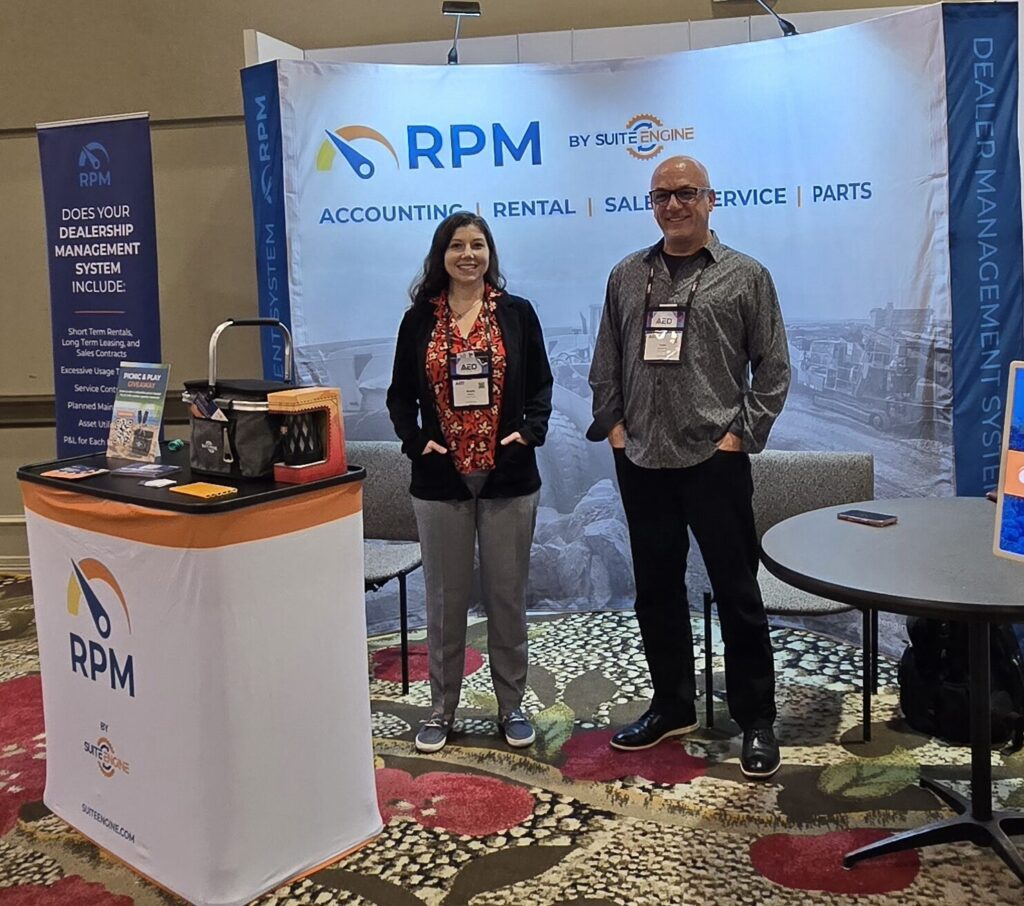
Tom Marshello and I just wrapped up three days at the 2026 AED Summit at the Hilton Anatole in Dallas. If you’ve been before, you know this is where dealers, manufacturers, and distributors drop the sales pitches and actually talk about what’s working and what’s not. This year felt particularly critical—tariffs, AI, workforce challenges, supply chain disruptions. None of it is getting simpler.
Why We Keep Coming Back
The equipment distribution business is complicated. We’re dealing with technology moving faster than most dealerships can adopt it, a workforce that’s either retiring or rethinking what they want from work, and regulatory changes that seem to drop weekly.
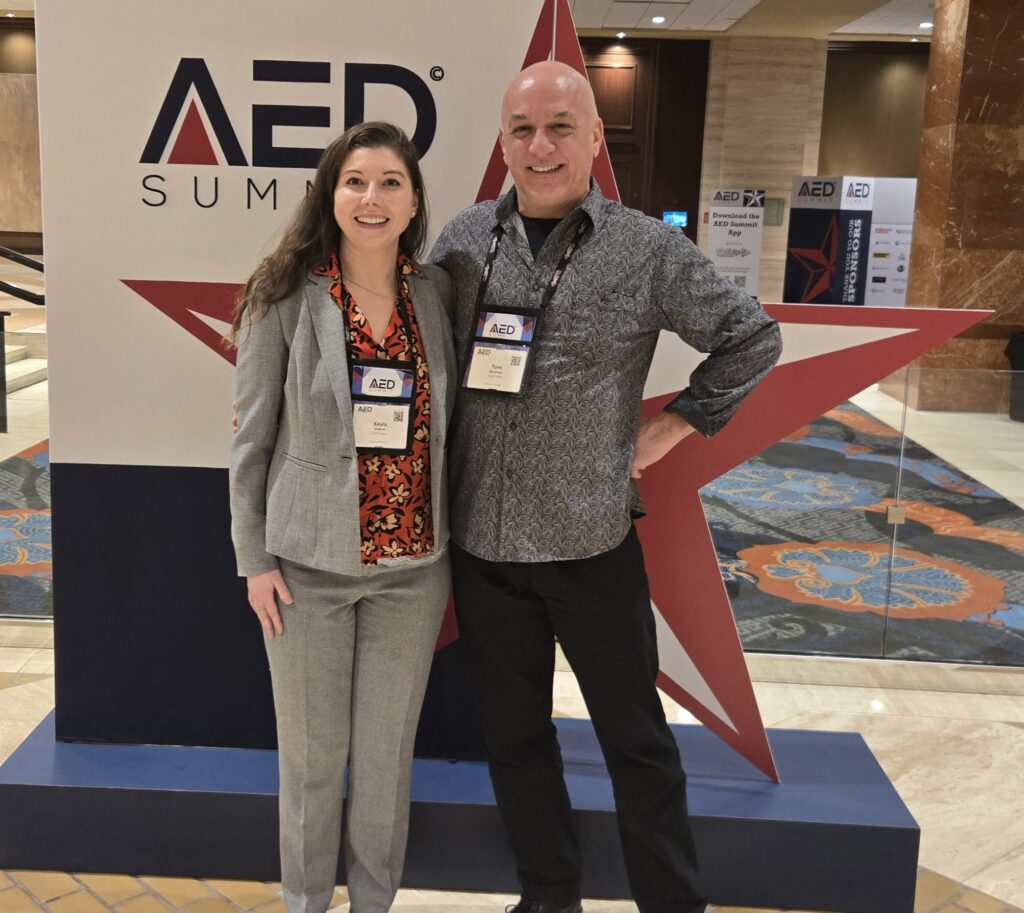 The Summit gives us a chance to compare notes with people facing the same challenges.
The Keynotes Hit Different This Year
Day one kicked off with First Sergeant Matt Eversmann (Ret.), whose story was portrayed in “Black Hawk Down.” I wasn’t sure what to expect from a military speaker at an equipment conference, but his talk on “Strategic Shock”—those unpredictable moments that throw every plan out the window—landed hard.
When you’re running a dealership and the market turns volatile, his principles for mitigating risk were surprisingly practical: it all comes down to your people.
The final day brought a much-needed data dump from Taylor St. Germain (ITR Economics) and Zippy Duvall (American Farm Bureau). The message was clear: uncertainty in early 2025 was statistically worse than the peak of the pandemic, and while growth is returning, it’s coming with a “Nationalism tax.”
The Stats You Can’t Ignore
According to the ITR Economics and American Farm Bureau presentations:
The Margin Trap: We’re entering an “accelerated growth” phase, but Taylor warned dealers could still lose 10% in margins over the next two years.
Commodity Heat: Expect double-digit increases in Steel, Copper, Aluminum, and Oil. If you aren’t adjusting your pricing models now, these costs will eat your growth.
Interest Rates: Don’t wait for 3% to return. ITR projects rates staying in the 7-8% range through 2030.
The Ag Outlook: Zippy Duvall highlighted a brutal paradox: while general inflation is cooling, farmers are battling a 23% drop in net income since 2022. Between high interest rates and sticky input costs, it’s the toughest squeeze in a generation.
However, the silver lining is coming. Commercial construction is rebounding, and the second half of 2026 looks like a “best bet” for dealers as farmers pivot toward high-efficiency equipment to protect their remaining margins.
The Economic Takeaway: Growth is coming, but it will be expensive. Success in 2026 isn’t about “gut instinct”—it’s about being interest-rate sensitive and diversifying before the next 10-year recession cycle hits.
That need for a global perspective is exactly why the conversation between Ambassador Nikki Haley and AED’s Brian McGuire was so timely. Her perspective made one thing very clear: trade policy isn’t just “politics” anymore, it’s a direct input for business.
From the cost of a replacement engine to the availability of parts, we’re now operating in a world where geopolitics is a line item on your P&L.
OEM Panel: Refreshingly Candid
Marc Johnson from Pinion Global moderated the OEM panel, which included leadership from Komatsu, Volvo, LiuGong, Kubota, Bobcat, and Case IH.
What made this valuable wasn’t the corporate talking points (though there were some). It was the moments when they actually talked about the challenges they’re facing—like internal communication breakdowns—and where they see things headed, such as using AI to make complex data concise and actionable.
You don’t often get that kind of access to manufacturer thinking.
Education Sessions: The Real Value
Tom and I attended as many sessions as we could manage. Here’s what we hit:
The Boomers Are Retiring; Gen Z and Millennials Are Questioning
The title says it all. This wasn’t just about attracting younger people—it was about the reality that we’re losing institutional knowledge while simultaneously struggling to keep the next generation engaged.
If you’re not thinking about this, you should be.
AI, The Modern Dealership, and The Aftermarket: Practical AI
If you haven’t already, you’re going to see AI across the dealership. Instead of theoretical use cases, these sessions focused on what dealerships are actually implementing today and what’s proven to work.
It was good to see focused discussion on where AI makes sense versus where traditional approaches still win.
Another session we attended talked about parts and service specifically. The aftermarket, as they emphasized, has its own unique challenges. And it was refreshing that others are acknowledging not everything labeled “AI” is worth the investment.
Dealer Panel: Best Practices & Emerging Trends
Getting dealers in a room to actually share what’s working (and what’s not) is rare. This panel delivered.
Honest discussions about operational challenges, customer expectations, and how to stay competitive when everyone’s dealing with the same margin pressures.
Next Level Meetings
This might sound basic, but the simple framework they provided for asking better questions and listening with purpose was immediately useful. Practical tactics you can use that afternoon, not theoretical concepts for when that one situation might come up.
CONDEX: Worth the Walk
Over 200 exhibitors across Tuesday and Wednesday. The expo hours—10:45 AM to 2:30 PM both days—worked well. Enough time to see what you need without taking over the entire event or overlapping with education sessions.
The Tuesday Summit Reception was a happy hour that brought together drinks and small bites to fuel conversations throughout the CONDEX floor, complete with a country band.
The AED Foundation: More Than a Conference
The AED Foundation sets this Summit apart. We didn’t make it to the Gala & Silent Auction this year, but it’s worth mentioning what they’re funding: workforce development initiatives.
Given that every conversation at this Summit touched on talent challenges, seeing the industry put actual dollars behind it matters. Beyond the Gala, the Foundation runs fundraising throughout the year to bring new people into the industry and develop the next generation of equipment professionals.
The industry talks plenty about workforce issues. AED is funding solutions.
What We’re Taking Back
A few things became clear over the three days:
The “Wait and See” Era is Over: Technology isn’t a future project—it’s the current baseline. It’s become clearer than ever that if you aren’t investing in your data infrastructure today, you aren’t just behind, you’re becoming invisible. Dealers who hesitate to modernize aren’t just slowing down; they’re creating a gap that may soon be impossible to bridge.
The Knowledge Transfer Race: We aren’t just hiring for roles. The more critical piece is the race to download decades of institutional knowledge before it walks out the door. If we don’t capture that expertise now, we’re starting from scratch with every new hire.
Partnerships Over Transactions: The OEM panel proved that the future belongs to the transparent. We’re moving toward a world where your tech vendors and manufacturers are strategic partners who help you cut through the noise, not just suppliers filling an order.
Data Over “Gut”: With tariffs and market volatility shifting by the week, “gut instinct” is a liability. Survival today requires the ability to look at real-time numbers and pivot before the market leaves you behind.
Final Thoughts
The Summit reminded us why this industry works. It isn’t just about the iron on the lot—it’s about the community behind it. Tom Marshello put it best:
“It’s not technology or equipment, it’s the people. Hallway conversations, the beers between sessions—that’s where the industry’s real work gets done. Away from the stage and the sales pitches. You can’t put a price on getting in a room where we can be honest about what’s failing and what’s actually moving the needle… that’s real value.”
If you were there, the work starts now. If you missed it, put it on your calendar for next year. The equipment distribution business is changing fast, and being in the room where these conversations happen matters.
What were your biggest takeaways from AED Summit 2026? I’d love to hear what resonated most with you.
SUITE ENGINE | We connect your business with modern software from Microsoft.
Simplified processes. All in one place.
Equipment Management | Production Builders | and more …
Related Articles:
- Lessons from the AED Women in Equipment Conference
- Revved Up From The AED Summit
- Boost Your Dealership
- Suite Engine’s Equipment ERP
- Why You Should Invest in ERP Now